Showing posts with label informative. Show all posts

Tuesday, December 14, 2010

House made from containers... in Malaysia!

I want!

Aku percaya korang sure penah dgr pasal house made from containers nih. Dah byk di implement kt negara barat, antara reason yg solid diorang implement bende nih adalah:

1. Go Green
I actually don't give a shit about this, but sometimes I do. Actually used containers dah berlambak dah kt dunia, org tak suka pasal ia makan ruang dan takde org yg nak bende nih. Reasonnye adalah ia adalah kosnye terlalu mahal utk someone ship back the containers back to its origin, so baik beli baru aje lebih murah. Akibatnya, terdapat le surplus containers.

Besides, construction waste on site pun dpt dikurangkan.

2. Murah
Satu container yg telah digunakan bole dibeli dgn harga serendah USD900. 5 bijik containers dah cukup utk membuat sebuah rumah banglo 2 tingkat dgn keluasan 2500 sqf.

3. Cepat
Sesebuah rumah banglo bersaiz 2500 sqf dpt disiapkan dlm tempoh 4 bulan shj.

Gambar diatas adalah banglo 2 tingkat pertama yg dibina. Ia dikenali sbg Redondo Beach House, adalah gagasan seorang arkitek dr Southern California bernama Peter De Maria pada tahun 2006.

Oleh kerana harga rumah yg mahal cam haram skang nih kt Malaysia especially area Lembah Klang, ade bagusnye jgk kalo kite implement benda nih kt kehidupan kita.

Dan actually mmg dah ade pun.

Sebuah company construction yg pakar dlm pembinaan banglo, Anand Banglow Sdn. Bhd sudah membina prototaip banglo 2 tingkat di Bukit Tinggi, Pahang. Banglo seluas 2500 sqf itu dibina drpd 5 buah containers terpakai. Contractor tuh claim bangunan drpd container nih sgt sesuai dibina dikawasan bercuaca extreme kerana rumah banglo nih senang2 boleh achieve suhu stabil sekitar 25 darjah celcius tanpa bantuan aircond ataupun even kipas!

Nak best lagi, kos keseluruhan bangunan ini apabila siap diaggarkan sekitar RM45 per sqft, bermakna lebih kurang RM112,500, bermakna lebih kurang RM120K! Fuuuuuuuu!!!! As a comparison rumah banglo berkeluasan 2500 sqft kt KL alone berharga sekitar RM1.5 juta!

Sila lihat gambar dibawah. I don't know about u guys tapi aku rase dgn kos mcm tuh, rumah nih sgt lah puas hati.


Sumber:


Thursday, December 9, 2010

Kentut

Ada jugak org buat kajian nih. LOL.

1. Dari mana asal kentut?
Dari gas dalam usus.
Gas dalam usus berasal dari udara yg kita telan, gas yang menerobos ke usus dari darah, gas dari reaksi kimia dan gas dari bakteria dalam perut.

2. Apa komposisi kentut?

Bervariasi. Makin banyak udara anda telan, makin banyak kadar nitrogen dalam kentut (oksigen dari udara diaserap oleh tubuh sebelum sampai di usus). Adanya bakteria serta reaksi kimia antara asam perut dan cairan usus menghasilkan karbon dioksida. Bakteria juga menghasilkan metana dan hidrogen. Propors masing-masing gas tergantung apa yang anda makan, berapa banyak udara tertelan, jenis bakteria dalam usus, berapa lama kita menahan kentut. Makin lama menahan kentut, makin besar proporsi nitrogen, kerana gas-gas lain terserap oleh darah melalui dinding usus. Orang yang makannya tergesa-gesa kadar oksigen dalam kentut lebih banyak kerana tubuhnya tidak sempat menyerap oksigen.

3. Kenapa kentut berbau busuk?

Bau kentut kerana kandungan hidrogen sulfida & merkaptan. Kedua bahan ini mengandung sulfur (belerang). Makin banyak kandungan sulfur dalam makanan anda, makin banyak sulfida & merkaptan diproduksi oleh bakteri dalam perut & makin busuklah kentut anda.. Telur & daging mempunyai peranan besar dalam memproduksi bau busuk kentut. Kacang-kacang berperanan dalam memproduksi volume kentut bukan dalam kebusukannya.

4. Kenapa kentut menimbulkan bunyi?

Kerana adanya vibrasi lubang `anus` saat kentut diproduksi. Kerasnya bunyi bergantung pada kecepatan gas.

5. Kenapa kentut yg busuk itu hangat & tidak berbunyi?

Salah satu sumber kentut adalah bakteria. Fermentasi bakteria & proses pencernaan memproduksi panas, hasil sampingannya adalah gas busuk. Ukuran gelembung gas lebih kecil dan hangat dengan produk metabolisme bakteria yg berbau busuk. Ini kemudiannya menjadi kentut, walau hanya kecil volumenya,tapi SBD (Silent But Deadly)

6. Berapa banyak kentut diproduksi sehari?

Rata-rata setengah liter sehari dalam 14 kali kentut.

7. Mengapa kentut keluar melalui lubang dubur?

Kerana density-nya lebih ringan, kenapa gas kentut tidak melakukan perjalanan ke atas? Tidak demikian. Gerak peristaltik usus mendorong isinya ke arah bawah. Tekanan di sekitar `anus` lebih rendah. Gerak peristaltik usus menjadikan ruang mempunyai tekanan, sehingga memaksa isi usus, termasuk gas-nya untuk bergerak ke kawasan yang bertekanan lebih rendah, iaitu sekitar `anus`. Dalam perjalanan ke arah `anus` gelembung-gelembung kecil bergabung jadi gelembung besar. Kalau tidak ada gerak peristaltik, gelembung gasakan menerobos ke atas lagi, tapi tidak terlalu jauh, kerana bentuk usus yg rumit & berbelit-belit.

8. Berapa waktu yang diperlukan oleh kentut untuk melakukan perjalanan ke hidung orang lain?

Bergantung kepada kondisi udara, seperti kelembaban, suhu, kecepatan & arah angin, berat molekul gas kentut, jarak antara 'transmitter' dengan 'receiver'. Begitu meninggalkan sumbernya, gas kentut menyebar & konsentrasinya berkurang. Kalau kentut tidak dikesan dalam beberapa detik, bererti ianya mengalami pengcernaan di udara & hilang ditelan udara selama-lamanya. Kecuali kalau anda kentut di ruang sempit, seperti lift, kereta, konsentrasinya lebih banyak, sehingga baunya akan berlegar dalam waktu yang agak lama sampai akhirnya diserap dinding.

9. Apakah setiap orang kentut?

Sudah pasti, kalau masih hidup. Sesaat setelah meninggalpun orang masih boleh kentut.

10. Betulkah lelaki kentut lebih kerap daripada perempuan?

Tidak ada kaitannya dengan gender... Kalau benar, bererti perempuan menahan kentutnya, & apabla mahu kentut, banyak sekali jumlah yg dikeluarkan.

11. Saat apa biasanya orang kentut?

Pagi hari di toilet. yang disebut "morning thunder". Kalau resonansinya bagus, boleh didengar di seluruh penjuru rumah.

12.. Mengapa makan kekacang menyebabkan banyak kentut?

Kekacang mengandung zat gula yg tidak boleh dicerna tubuh. Gula tersebut (raffinose, stachiose, verbascose) jika sampai di usus, bakteria di usus berpesta & membuat banyak gas. Jagung, kubis, susu juga penyebab banyak kentut (bukan baunya!).

13. Selain makanan, apa lagi penyebab kentut?

Udara yang tertelan, makan terburu-buru, makan tanpa dikunyah, minum `soft drink`, naik pesawat udara (kerana tekanan udara lebih rendah, sehingga gas di dalam usus mengalami ekspansi & muncul sebagai kentut).

14. Apakah kentut sama dengan sendawa, tapi muncul dari lain lubang?

Tidak... sendawa muncul dari perut, komposisi kimianya lain dengan kentut. Sendawa mengandung udara lebih banyak, kentut mengandung gas yang diproduksi oleh bakteria lebih banyak.

15. Kemana perginya gas kentut kalau ditahan tidak dikeluarkan?

Bukan..tetapi diserap oleh darah, bukan hilang kerana bocor..Tapi bermigrasi ke bahagian atas menuju usus & pada gilirannya akan keluar juga.. Jadi bukan lenyap, tapi hanya mengalami penundaan.

16. Mungkinkah kentut terbakar?

Boleh saja. Kentut mengandung metana, hidrogen yg combustible (gas alam mengandung komponen ini juga). Kalau terbakar, nyala-nya berwarna biru kerana kandungan unsur hidrogen.

17. Bolehkah menyalakan mancis dengan kentut?

Jangan mengada-ada... konsistensinya lain.. Juga suhunya tidak cukup panas untuk memulakan pembakaran.

18. Mengapa kentut anjing & kucing lebih busuk?

Kerana anjing & kucing adalah karnivor (pemakan daging). Daging kaya dengan protein. Protein mengandung banyak sulfur, jadi bau kentut binatang ini lebih busuk. Lain dengan herbivor seperti kambing, kuda, gajah, yang memproduksi kentut lebih banyak, lebih lama, lebih kuat bunyinya, tapi relatif tidak berbau.

19. Betulkah pening kepala kalau mencium bau kentut 2-3 kali berturut-turut?

Kentut mengandung sedikit oksigen, mungkin sedikit saja anda mengalami pening kepala kalau mencium bau kentut terlalu banyak.

20. Apakah warna kentut?

Tidak berwarna.

21. Apakah kentut itu asid atau neutral?

Asid, kerana mengandung karbondioksisa (CO2) & hidrogen sulfida (H2S).

22. Apa yang terjadi kalau seseorang kentut di planet Venus?

Planet Venus sudah banyak mengandungi sulfur (belerang) di lapisan udaranya, jadi kentut di sana tidak ada kesannya.

Monday, December 6, 2010

Why must some medicines be taken with or after food?

Aku tgh demam skang. Doktor kasik ubat yg mesti diambil lps makan something. Lps tuh aku terpikir, kenapa ubat mesti kene ambil lps makan something? Aku google, jawapannya adalah spt dibawah.

If you have any concerns about the information below, or need any help understanding it and relating it to your own situation, you should talk to your GP or pharmacist (chemist). You can also phone NHS Direct on 0845 4647.

The labels on medicines or the patient information leaflets provided with them sometimes state that a medicine must be taken with or after food. There are six main reasons why medicines may need to be taken with or after food:

(1) Some medicines may cause nausea or vomiting as a side effect.

It is therefore better to take them after a meal to reduce this side effect. Examples include:

· Allopurinol (a medicine prescribed for gout, at the start of chemotherapy and other conditions).

· Bromocriptine (a medicine prescribed for Parkinson's disease and other conditions).

· Madopar (Co-Beneldopa) (a medicine prescribed for Parkinson's disease and other conditions).

(2) Irritant medicines may cause indigestion, stomach inflammation or ulcers as side effects.

Taking the medicine with food will help to reduce its irritant effect. Food such as biscuits or a sandwich or a glass of milk is usually enough. Examples include:

· Aspirin.

· Non-Steroidal Anti-Inflammatory Drugs e.g. diclofenac, ibuprofen (medicines that help to reduce inflammation or swelling that are prescribed for rheumatoid arthritis and other joint problems).

· Steroids e.g. prednisolone, dexamethasone (medicines prescribed for a wide range of conditions including asthma, rheumatoid arthritis, Crohn's disease and during chemotherapy).

(3) Antacids e.g. Gaviscon, are taken to prevent heartburn, reflux or indigestion.

This usually occurs when acid is produced as food enters your stomach. Therefore, the most benefit is gained by taking antacids immediately after or in the middle of a meal.

(4) Medicines that act on the mouth or throat should not be used just before eating.

Preparations such as mouthwashes, liquid nystatin and miconazole gel for oral thrush, and preparations for mouth ulcers must be used after meals. This is because eating food washes the medicine away too quickly.

(5) Certain medicines require food in the stomach and gut for them to be absorbed into the bloodstream properly.

For example, the HIV medicines ritonavir, saquinavir and nelfinavir.

(6) Medicines for diabetes, if taken by mouth, should usually be taken around meal times to reduce blood sugar levels after eating, and to avoid hypoglycaemia (very low blood sugar).

However, some are taken before meals, some during meals, and some afterwards follow the instructions that you are given.

Summary

Some medicines must be taken with or after food. Failing to do this may give you an upset stomach or may stop the medicine from working properly.


Sumber:

1. NHS UK

Saturday, November 13, 2010

UTP Academic Building

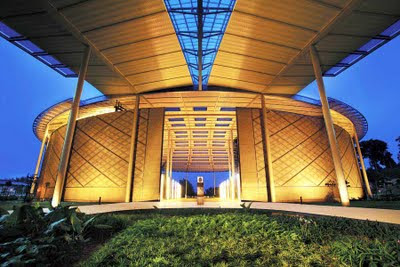
Masa aku study kt UTP dulu, sempat la merasa guna bangunan akademik baru nih utk satu semester. First time kitorang masuk aje, terus "Wahhhhh!" Gempak gile beb. Mmg lawa dan futuristik. Dgr cite mase KRU pegi buat talk pasal movie CicakMan kt UTP arituh pun diorang express kekaguman diorang terhadap building tuh punye design.

FYI, bangunan nih direka oleh Foster and Partners, company yg sama mereka jambatan Millau-Viaduct. Awesome gile. Pada tahun 2007, bangunan nih menang anugerah Aga Khan Award for Architecture. Anugerah berprestij nih diadakan setiap 3 tahun sekali dan dianugerahkan kpd bangunan dalam dunia Islam atau yg menampilkan ciri2 Islamik.


Rekaan bangunan nih adalah berdasarkan bintang berbucu 5 dgn sisinya terdiri drpd separuh bulatan. Disalah satu bucu tuh adalah bangunan Chancellor Complex yg menempatkan Chancellor Hall dan Library baru.


Masa aku study dulu, ada sebahagian wing die yg still tak siap lg. Skang tatau laa. Kalo berdasarkan gambar kt bawah mcm dah siap.


Gambar kt bawah nih ialah close up Chancellor Complex. Dikalangan budak2 UTP bangunan nih famous dgn gelaran Enterprise, atau UFO, pasal bangunan nih rupa die mcm USS Enterprise dalam cite Star Trek.


Kalo korang notice gambar Chancellor Complex kt bawah nih seolah2 ada dua bahagian. Mmg pun. Yg sebelah kiri ialah Chancellor Hall dan yg sebelah kanan ialah Library. Kedua2nya adalah awesome.


Nih ialah library die. Mmg awesome. Masa zaman aku buku tak byk lagi. Tp berhati2 bila naik tangga, especially kpd awek2 yg pakai skirt, pasal tangga die jarang so kalo awek pakai skirt naik tangga org kt bawah bole nampak spender. Haha.


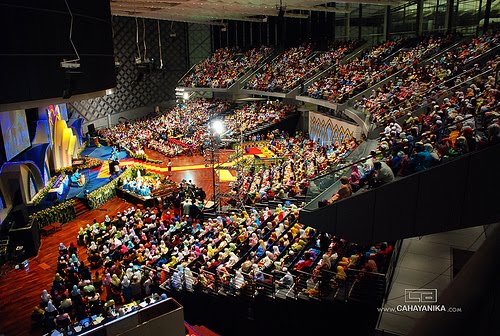
Yang nih pulak ialah Chancellor Hall. Upacara graduasi dan byk lagi aktiviti diadakan disini.


Kt tengah2 academic building tuh pulak ada taman yg sgt awesome. Kt tengah2 taman tuh pulak ade hutan bukit yg mmg sengaja dibiarkan oleh contractor sbg sebahagian drpd taman, dan dihias dgn lampu serta laluan pejalan kaki. Kelilingnye lak ialah ade artificial sungai. Awesome man.


Sumber:

Tuesday, October 26, 2010

China's CCTV Headquarters

Aku adalah penggila senibina. Dulu masa interview nak fly lps result trial SPM, penah jgk nak try apply jadik arkitek, tp memandangkan aku tak pandai melukis so aku scrap idea tuh totally. Zaman tuh mane le tau sebenarnye skill drawing architecture tuh kita bole belajar.

So antara hobi aku ialah aku suka tgk design bangunan yg pelik2. Tuh pasal aku suka gile dgn series Discovery Channel's Extreme Engineering ngan National Geographic's Megastructures, psl selalu tunjukkan construction building yg pelik2. Arkitek lak sengaja design bangunan yg mmg memeningkan kepala para engineer.

Dan aku suka jgk tgk architecture bangunan2 purba, especially yg involve China.

Anyway, gambar dibawah ialah bangunan HQ China's CCTV, menempatkan pejabat utama China Central Television. Bangunan yg memiliki 54 tingkat ini berketinggian 234m mula dibina pd 1 Jan 2002 dan siap menjelang Sukan Olimpik Beijing 2008.

Antara fakta menarik pasal building nih ialah 2 buah menara dibina dulu, dan sewaktu hendak dicantumkan, construction terpaksa dijalankan pada awal pagi utk memastikan keluli dgn kedua2 menara tuh berada pada suhu yg sama. Pening siot kepala engineer camnih.


Sungguhpun bangunan nih telah dirasmikan pada 1 Jan 2008, tp smp skang tak di occupied. Pasal pada 9 Feb 2009 berlaku kebakaran dekat bangunan Mandarin Oriental Hotel yg juga dlm pembinaan disebelahnye, which effecting bangunan nih agak teruk jgk laa. So smp skang takde penghuni lagi. Setahu aku laa.


Tp ada jugak lawak dikalangan penduduk Beijing, yg memanggil bangunan nih sbg "Bangunan Buasir", pasal bangunan nih saling tak tumpah mcm org tgk duduk bertinggung dalam jamban. Haha. Lawak la lu orang chinese.


Sumber adalah dari sini, sini, sini dan sini.

Tuesday, October 19, 2010

Top 10 Failed Futuristic Predictions

We are waiting.

1. Universal Jumpsuits

The Star Trek series and movies, Battlestar Galactica, Logan's Run. A universal, monochromatic jumpsuit seems to constantly rear its ugly head in sci-fi films, as if everyone in the future gets some sort of style memo. But unfortunately, we're still in the old-school, individualist mind-set of wearing different clothes from everyone else. However, in one of Jerry Seinfeld's funnier comedy routines, he predicts that eventually fashion won't even exist. "Anytime I see a movie or a TV show where there are people from the future or another planet, they're all wearing the same outfit. Somehow they all decided, 'All right, that's enough. From now on, this is going to be our outfit: one-piece silver jumpsuit with a V-stripe on the chest and boots. That's it. We're going to start visiting other planets and we want to look like a team.'"

2. Jet Packs

So there are jet packs out there. They just aren't available to the masses. The idea of gas-filled backpacks came into vogue in 1920s science-fiction magazines like Amazing Stories and later reappeared in popular culture in the James Bond movie Thunderball (pictured) as well as in the comic book (and movie) The Rocketeer. During World War II, Germany experimented with pulse jet tubes by attaching them to the bodies of pilots to fly them over minefields, but the project never got far off the ground. While various attempts have since been made to make jet packs commercially available, the devices have been limited to astronauts, who use them on space stations so as not to float away. This year, however, the New Zealand–based Martin Aircraft Company reportedly signed a $12 million joint-venture deal to begin the manufacture of jet packs that would eventually be available commercially. That news is sure to make one indie band very happy.

3. Meals in Pill Form

Food of the future wasn't supposed to be concerned with good carbs or trans fats. Instead, the act of eating was itself supposed to go away, replaced with taking a pill. Characters from George Jetson to Leela on Futurama popped pills with the full taste, and sometimes the indigestion, that comes with a typical meal. Imagine the possibilities — feeling full and getting the right nutrients without ever cooking or worrying about calories.

Unfortunately, the physics just don't work out. The average person needs 2,000 calories each day. If you put all those calories into fat form and placed them into pills, you'd need to swallow a half-pound of pills every day. And that wouldn't even include protein, carbohydrates or essential vitamins. So why constantly swallow pills to get your fat requirement when you can have a slice of pizza?

Though our food-pill dreams may be dashed, we are getting closer to a portable flavor experience. Scientists at the Institute of Food Research in Norwich, England, say they're close to coming up with a chewing gum that tastes like a full meal, like the one Violet Beauregarde chomped on in Charlie and the Chocolate Factory. The full calories won't be there, but the flavors are expected to be released at different times, simulating a three-course meal while chewing. Let's just hope the gum doesn't turn us into blueberries.

4. A Worldwide Government

Fans of that particularly epic sci-fi genre of space opera (think fleets of spaceships and big laser cannons) have long been prepared for the day when earth is ruled by one single, benign government. What's the point of our current world order, that inchoate mess of nation-states and petty geopolitical divisions, when we have far bigger fish — or alien planets — to fry? A host of television series, from Star Trek to Babylon 5 to the short-lived Space: Above and Beyond, all ensured that the political exigencies of our little rock in the solar system were managed by just one global entity: call it a federation or an alliance or even the U.N.

Robert Heinlein, author of the cult novel Starship Troopers (made into a film in 1997), gave considerable thought to what a one-world government would look like. The Terran Federation in Starship Troopers emerges after the world's many democracies collapse into disarray in the 21st century, allowing a group of military vigilantes to establish a kind of global Spartan republic. True citizenship is only conferred after military service — and the whole situation eventually carries creepy, fascist undertones. Even if the Terran Federation would be better prepared to face the threat of those bulbous, bug-eyed arachnids, TIME reckons we'd rather take our chances with what we've got.

5. Flying Cars

When we met George Jetson, his boy Elroy, daughter Judy and Jane (his wife), we met them in their flying automobile. Back to the Future II memorably featured flying cars, as did Blade Runner, The Fifth Element and loads of other movies. Indeed, the flying car is a staple of most respectable fictional future worlds. Yet compared with some other futuristic goals (like, say, time travel or teleportation) flying cars really don't seem all that far-fetched. We have cars. We have planes. Why don't we have flying cars? Granted, their mechanics may be tricky. And they would require some complicated infrastructure. And perhaps fuel could be a problem. And sure, some people have a hard enough time getting their driver's licenses ...

But the dream lives! The Defense Advanced Research Projects Agency's Transformer program is aimed at creating four-person "vertical takeoff and landing, road-worthy vehicles." Terrafugia is working on the Transition Roadable Aircraft, and according to the company's website, they're supposed to be out next year and "over 80 aircraft have been reserved." Of course, the website also notes that "the Transition isn't designed to replace anyone's car, but it could replace your airplane." So ... it's not for everyone.

6. Time Travel

We've been teased mercilessly with the prospect of time travel by literature (The Time Machine, Slaughterhouse-Five), movies (Back to the Future, Bill and Ted's Excellent Adventure) and even television (Quantum Leap). But so far, the concept has remained limited strictly to fiction. The advantages to being able to travel through time are clear (meeting Napoleon, watching the moon landing), and the disadvantages have been pretty well chronicled too (i.e. really screwing things up). As much as we all would like to see time travel become a reality, some things are probably best left to the imagination.


7. Teleportation

"Beam me up, Scotty!" The show: Star Trek. The Scotty: Montgomery Scott. The beaming: teleportation. It's a staple of many sci-fi plots, this ability to be transported from place to place instantaneously. While nothing even close has yet made its way to the real world, a number of physicists have studied whether we really could hurtle ourselves through a hypothetical wormhole. The U.S. Air Force has undertaken a study on it, and one man has even filed a patent for "a pulsed gravitational wave wormhole generator system that teleports a human being through hyperspace from one location to another."

8. Underwater Cities

Who needs space when there remain the unfathomable depths of our own oceans? James Cameron's Abyss conjured a world of deep-sea sentient aliens, but they end up being all ethereal tendrils and no fun. Filmmakers of an earlier era had a better idea: underwater cities! A glut of B movies from War Gods of the Deep to Captain Nemo and the Underwater City dump their protagonists in latter day Atlantises and surround them with amphibian humanoids and curmudgeonly mad scientists. And why not? With water levels rising, we may as well start thinking about oceanic living. A few super-high-end luxury hotels in places like Dubai and the Maldives offer "underwater" accommodation and dining, replete with stunning views of marine life. But where are the trident-wielding frog men?

9. Cyborg Abilities

Thanks to television series The Six Million Dollar Man, bionic beings were all the rage in the '70s. Protagonist Steve Austin was "Better. Stronger. Faster." Today, some people could be considered cyborgs — think Kevin Warwick, the scientist who implanted a radio-frequency ID chip in his body, or Jesse Sullivan, who after he lost his arms was given bionic ones — but most of us aren't artificially better, stronger or faster ... not like the Terminator or RoboCop. At least, not yet. Perhaps it's for the best. There's no guarantee all will use superhuman abilities for good. Also, if you're someone who still struggles with or is confounded by technology, maybe incorporating it directly into your body isn't the best idea.

10. A Postapocalyptic Landscape

The Mad Max films, Planet of the Apes, The Road, The Terminator, War of the Worlds, WALL-E — pop-culture visions of the future have oft shown us depressing depictions of what it would be like to survive a nuclear war or a war against robots or a war against pollution. Lots of war. On second thought ... this should probably be No. 1 on our next list: Top 10 Predictions for the Future That, Thankfully, Did Not Come True.

Source here

Sunday, August 22, 2010

Why talented people leave companies?

I'm not a boss yet myself, but this is kinda true. From the perspective of an employee at least.

Read on....

Largest studies undertaken by the Gallup Organization.

Why do talented employees leave companies? Come to think of it. This is almost 100% true. Read below & find out the answer.

Early this year, Arun, an old friend who is a senior software designer, got an offer from a prestigious international firm to work in its India operations developing specialized software. He was thrilled by the offer.

He had heard a lot about the CEO of this company, a charismatic man often quoted in the business press for his visionary attitude.

The salary was great. The company had all the right systems in place employee-friendly human resources (HR) policies, a spanking new office, the very best technology, even a canteen that served superb food.

Twice Arun was sent abroad for training. "My learning curve is the sharpest it's ever been," he said soon after he joined. "It's a real high working with such cutting edge technology."

Last week, less than eight months after he joined, Arun walked out of the job. He has no other offer in hand but he said he couldn't take it anymore.

Nor, apparently, could several other people in his department who have also quit recently. The CEO is distressed about the high employee turnover.

He's distressed about the money he's spent in training them. He's distressed because he can't figure out what happened. Why did this talented employee leave despite a top salary? Arun quit for the same reason that drives many good people away. The answer lies in one of the largest studies undertaken by the Gallup Organization.

The study surveyed over a million employees and 80,000 managers and was published in a book called "First, Break All The Rules."

It came up with this surprising finding: If you're losing good people, look to their immediate supervisor. More than any other single reason, he is the reason people stay and thrive in an organization. And he's the reason why they quit, taking their knowledge, experience and contacts with them. Often, straight to the competition.

"People leave managers not companies," write the authors Marcus Buckingham and Curt Coffman. "So much money has been thrown at the challenge of keeping good people - in the form of better pay, better perks and better training - when, in the end, turnover is mostly a manager issue." If you have a turnover problem, look first to your managers. Are they driving people away?

Beyond a point, an employee's primary need has less to do with money, and more to do with how he's treated and how valued he feels. Much of this depends directly on the immediate manager. And yet, bad bosses seem to happen to good people everywhere. A Fortune magazine survey some years ago found that nearly 75 per cent of employees have suffered at the hands of difficult superiors. You can leave one job to find - you guessed it, another wolf in a pin-stripe suit in the next one.

Of all the workplace stressors, a bad boss is possibly the worst, directly impacting the emotional health and productivity of employees.

Here are some all-too common tales from the battlefield:

Dev, an engineer, still shudders as he recalls the almost daily firings his boss subjected him to, usually in front of his subordinates. His boss emasculated him with personal, insulting remarks. In the face of such rage, Dev completely lost the courage to speak up. But when he reached home depressed, he poured himself a few drinks, and magically, became as abusive as the boss himself. Only, it would come out on his wife and children. Not only was his work life in the doldrums, his marriage began cracking up too.

Another employee Rajat recalls the Chinese torture his boss put him through after a minor disagreement. He cut him off completely. He bypassed him in any decision that needed to be taken. "He stopped sending me any papers or files," says Rajat. "It was humiliating sitting at an empty table. I knew nothing and no one told me anything." Unable to bear this corporate Siberia, he finally quit.

HR experts say that of all the abuses, employees find public humiliation the most intolerable. The first time, an employee may not leave, but a thought has been planted. The second time, that thought gets strengthened.

The third time, he starts looking for another job.

When people cannot retort openly in anger, they do so by passive aggression. By digging their heels in and slowing down. By doing only what they are told to do and no more. By omitting to give the boss crucial information. Dev says: "If you work for a j erk, you basically want to get him into trouble. You don't have your heart and soul in the job."

Different managers can stress out employees in different ways - by being too controlling, too suspicious, too pushy, too critical, too nit-picky.

But they forget that workers are not fixed assets, they are free agents.

When this goes on too long, an employee will quit -often over seemingly trivial issue. It isn't the 100th blow that knocks a good man down. It's the 99 that went before. And while it's true that people leave jobs for all kinds of reasons - for better opportunities or for circumstantial reasons, many who leave would have stayed - had it not been for one man constantly telling them, as Arun's boss did: "You are dispensable. I can find dozens like you.

While it seems like there are plenty ! of other fish especially in today's waters, consider for a moment the cost of losing a talented employee.

There's the cost of finding a replacement. The cost of training the replacement. The cost of not having someone to do the job in the meantime.

The loss of clients and contacts the person had with the industry. The loss of morale in co-workers. The loss of trade secrets this person may now share with others.

Plus, of course, the loss of the company's reputation. Every person who leaves a corporation then becomes its ambassador, for better or for worse.

We all know of large IT companies that people would love to join and large television companies few want to go near. In both cases, former employees have left to tell their tales.

"Any company trying to compete must figure out a way to engage the mind of every employee," Jack Welch of GE once said. Much of a company's value lies "between the ears of its employees". If it's! bleeding talent, it's bleeding value. Unfortunately, many senior executives busy traveling the world, signing new deals and developing a vision for the company, have little idea of what may be going on at home.

That deep within an organization that otherwise does all the right things, one man could be driving its best people away.

Wednesday, August 11, 2010

Sunday, August 8, 2010

Wong Fei Hong

Agaknya tuh pasal la die tak suka praktikkan jurus tinju die yg paling dashyat, iaitu Tinju Mabuk pasal die kene minum arak dulu kot. Hahaha

Selama ini kita hanya mengenal Wong Fei Hung sebagai jagoan Kung fu dalam film Once Upon A Time in China . Dalam filem itu, karakter Wong Fei Hung dimainkan oleh aktor terkenal Hong Kong , Jet Li. Namun siapakah sebenarnya Wong Fei Hung?

Wong Fei Hung adalah seorang Ulama, Ahli Perubatan, dan Ahli Beladiri legendaris yang namanya ditetapkan sebagai Pahlawan Nasional China oleh pemerintah China. Namun Pemerintah China sering berupaya mengaburkan jatidiri Wong Fei Hung sebagai seorang muslim demi menjaga imej kekuasaan Komunis di China.

Wong Fei-Hung dilahirkan pada tahun 1847 di Kwantung (Guandong) dari keluarga muslim yang taat. Nama Fei pada Wong Fei Hung merupakan dialek Canton untuk menyebut nama Arab, Fais. Sementara Nama Hung juga merupakan dialek Kanton untuk menyebut nama Arab, Hussein. Jadi, bila di-bahasa-arab- kan, namanya ialah Faisal Hussein Wong.

Ayahnya, Wong Kay-Ying adalah seorang Ulama, dan tabib ahli ilmu penrubatan tradisional, serta ahli beladiri tradisional Tiongkok (wushu/kungfu). Ayahnya memiliki sebuah klinik perubatan bernama Po Chi Lam di Canton (ibukota Guandong). Wong Kay-Ying merupakan seorang ulama yang menguasai ilmu wushu tingkat tinggi. Ketinggian ilmu beladiri Wong Kay-Ying membuatnya dikenal sebagai salah satu dari Sepuluh Macan Kwantung. Posisi Macan Kwantung ini di kemudian hari diwariskannya kepada Wong Fei Hung.

Kombinasi antara pengetahuan ilmu perubatan tradisional dan teknik beladiri serta ditunjang oleh keluhuran budi pekerti sebagai Muslim membuat keluarga Wong sering turun tangan membantu orang-orang lemah dan tertindas pada masa itu. Karena itulah masyarakat Kwantung sangat menghormati dan mengidolakan Keluarga Wong.

Pesakit klinik keluarga Wong yang meminta bantuan perubatan umumnya berasal dari kalangan miskin yang tidak mampu membayar kos perubatan. Walau begitu, Keluarga Wong tetap membantu setiap pesakit yang datang dengan sungguh-sungguh. Keluarga Wong tidak pernah memilih bulu dalam membantu, tanpa memedulikan suku, ras, agama, semua dibantu tanpa pilih kasih. Secara rahsia, keluarga Wong terlibat aktif dalam gerakan bawah tanah melawan pemerintahan Dinasti Ch'in yang rasuah dan penindas. Dinasti Ch'in ialah Dinasti yang merubuhkan kekuasaan Dinasti Yuan yang memerintah sebelumnya. Dinasti Yuan ini dikenal sebagai satu-satunya Dinasti Kaisar Cina yang anggota keluarganya banyak yang memeluk agama Islam.

Wong Fei-Hung mula mengasah bakat beladirinya sejak berguru kepada Luk Ah-Choi yang juga pernah menjadi guru ayahnya. Luk Ah-Choi inilah yang kemudian mengajarnya dasar-dasar jurus Hung Gar yang membuat Fei Hung berjaya melahirkan Jurus Tendangan Tanpa Bayangan yang menjadi lagenda. Dasar-dasar jurus Hung Gar ditemukan, dikembangkan dan merupakan andalan dari Hung Hei-Kwun, abang seperguruan Luk Ah-Choi. Hung Hei-Kwun adalah seorang pendekar Shaolin yang terlepas dari peristiwa pembakaran dan pembantaian oleh pemerintahan Dinasti Ch'in pada 1734.

Hung Hei-Kwun ini adalah pemimpin pemberontakan bersejarah yang hampir mengalahkan dinasti penjajah Ch'in yang datang dari Manchuria (sekarang kita mengenalnya sebagai Korea ). Jika saja pemerintah Ch'in tidak meminta bantuan pasukan-pasukan bersenjata bangsa asing (Rusia, Inggris, Jepun), pemberontakan pimpinan Hung Hei-Kwun itu nescaya akan berjaya mengusir pendudukan Dinasti Ch'in.

Setelah berguru kepada Luk Ah-Choi, Wong Fei-Hung kemudian berguru pada ayahnya sendiri hingga pada awal usia 20-an tahun, ia telah menjadi ahli perubatan dan beladiri terkemuka. Bahkan ia berjaya mengembangkannya menjadi lebih maju. Kemampuan beladirinya semakin sulit ditandingi ketika ia berhasil membuat jurus baru yang sangat taktis namun efisien yang dinamakan Jurus Cakar Macan dan Jurus Sembilan Pukulan Khusus. Selain dengan tangan kosong, Wong Fei-Hung juga mahir menggunakan bermacam-macam senjata. Masyarakat Canton pernah menyaksikan langsung dengan mata kepala mereka sendiri bagaimana ia seorang diri dengan hanya memegang tongkat berjaya menewaskan lebih dari 30 orang jagoan pelabuhan berbadan kekar dan kejam di Canton yang mengeroyoknya karana ia membela rakyat miskin yang akan mereka peras.

Dalam kehidupan keluarga, Allah banyak mengujinya dengan berbagai cobaan. Seorang anaknya terbunuh dalam suatu insiden perkelahian dengan mafia Canton . Wong Fei-Hung tiga kali menikah karena isteri-isterinya meninggal dalam usia pendek. Setelah isteri ketiganya meninggal, Wong Fei-Hung memutuskan untuk hidup sendiri sampai kemudian ia bertemu dengan Mok Gwai Lan, seorang perempuan muda yang kebetulan juga ahli beladiri. Mok Gwai Lan ini kemudian menjadi pasangan hidupnya hingga akhir hayat. Mok Gwai Lan turut mengajar beladiri pada kelas khusus perempuan di perguruan suaminya.

Pada 1924 Wong Fei-Hung meninggal dalam usia 77 tahun. Masyarakat Cina, khususnya di Kwantung dan Canton mengenangnya sebagai pahlawan pembela kaum mustad'afin (tertindas) yang tidak pernah gentar membela kehormatan mereka. Siapapun dan berapapun jumlah orang yang menindas orang miskin, akan dilawannya dengan segenap kekuatan dan keberanian yang dimilikinya.Wong Fei-Hung meninggal dengan meninggalkan nama harum yang membuatnya dikenal sebagai manusia yang hidup mulia, salah satu pilihan hidup yang diberikan Allah kepada seorang muslim selain mati Syahid. Semoga segala amal ibadahnya diterima di sisi Allah Swt dan semoga segala kebaikannya menjadi teladan bagi kita, generasi muslim yang hidup setelahnya. Amiin.

Wednesday, July 21, 2010

Kopi Termahal Di Dunia

Dok kecoh2 pasal kopi Luwak. Baru2 nih Majlis Fatwa Indonesia meluluskan bahawa kopi Luwak nih halal. Saksikan macammane proses penghasilannya.


Tahukah anda apakah kopi yg termahal di dunia?

Cappucino? Expresso? Mocha?
What? Kopi Janda? Tu yg mahal bukan kopinya.. tapi jandanya. Kah kah kah...

Biasa kita minum kopi.. kopi yg diproses dari biji kopi asli. Tapi berlainan dengan kopi ini. Nama pun paling mahal, mesti la ada spesel nya.. Hehe.

Pernah dengar nama Kopi Luwak? Kopi Luwak ialah kopi paling mahal di dunia.

Kenapa mahal? Sebab ia ada ingredient tambahan.. diproses dan diadun secukup rasa, bukan dalam periuk belanga, tapi dalam perut haiwan.. Haa, jangan terkejut beb. Sebab tu la mahal.. Hehe.


Kopi Luwak keluaran Thailand berjenama 'Doi Chaang'.

Kopi Luwak keluaran Filipina berjenama 'Alamid'.

Eh.. menatang ape ni? Apa kaitan dengan kopi lak ni?

Haa.. menatang ni la yg buat kopi ni sedap. Menatang ni la yg telah menaiktaraf status kopi ni jadi the most expensive coffee in this world!

Cane jadi gitu pulak? Haa.. relek.. follow story kat bawah ni...

Menatang ni namanya Civet. Lebih kurang macam musang la, badan bintik2.. membiak area Asia , Afrika dan Eropah.

Petani di Jawa Timur memetik biji kopi sebagai makanan Civet.

Hanya biji kopi yg elok dan terpilih je dijadikan makanan Civet.. demi menghasilkan kopi yg berkualiti tinggi.. Errkkk..

Civet diberi makan biji kopi terpilih. Masa proses penghadaman, enzim Civet akan bercampur dengan biji kopi ni. Bila najis keluar, ia akan menghasilkan biji kopi yg unik dan tasty.. Gulp!

Najis Civet dipungut untuk diproses.

Haha.. amacam, ada macam wafer cereal tak? Kah kah kah...

Proses pembersihan dan pemilihan biji kopi Civet yg terbaik untuk dikisar menjadi serbuk kopi.


Inilah hasilnya... Kopi Termahal di Dunia!! Wahaha..

Disclaimer: Aku dpt artikel nih dari email, so aku tak berape sure sources nye. But I believe somebody wrote about this in his/her blog, so to whom ever out there, if this is your original post, please claim it and i'll link it back to yours. TQ